
How Much Space Do You Actually Need for a Home Elevator in Ontario?
- Melissa C

- Mar 10
- 5 min read
When you’re designing a custom home or planning a major renovation in Southern Ontario, floor space is incredibly valuable. Whether you're building a new property in the centre of Toronto or upgrading a lakeside retreat, nobody wants to sacrifice a massive chunk of their floor plan just to fit an elevator.
One of the most common questions we get from homeowners and architects is, "How big does the shaft actually need to be?" There is a lot of outdated information online that makes people think they need a massive commercial-sized footprint to make this work. The reality is that modern residential lifts are incredibly space-efficient. Here is a look at how much room you actually need, and why you don't have to redesign your entire house to get one.
The 5x5 Rule of Thumb
A lot of people reading brochures online confuse the size of the elevator cab with the size of the hoistway (the shaft the elevator actually travels in).
The most common hoistway size you need to plan for is 5'x5' of clear interior space. That is 25 square feet of empty room. However, you also have to factor in the walls. That 5'x5' measurement does not include your 2x4 or 2x6 framing. While it takes up a bit more room than a standard closet, it is still highly manageable to fit into a modern residential floor plan without destroying your layout.
Pro Tip for Builders: If you want to see exactly how a cab will fit into your specific layout, check out our Aurora Hoistway Size Calculator. It’s the easiest way to get precise dimensions before you start framing.
The Advantage of Custom Sizing
Here is where a lot of builders and homeowners get stuck: they look at a competitor's brochure, see a rigid "standard" size chart, and realize their framed space is a few inches off.
Because we operate out of our headquarters right here in Ayr, Ontario, we manufacture our elevators to order. We provide custom sizes, which means we can accommodate almost any pre-sized or already built hoistway. If your architect designed a space with unique dimensions, or if you are retrofitting an older home where the framing is already set in stone, we just build the cab to fit what you have. You don't have to pay your contractor to tear down walls to fit a generic box.
Forget the Mechanical Room
In the past, traditional hydraulic elevators required you to build a totally separate mechanical closet to hold a bulky pump and a massive tank of fluid. That ate up a lot of extra square footage in your basement.
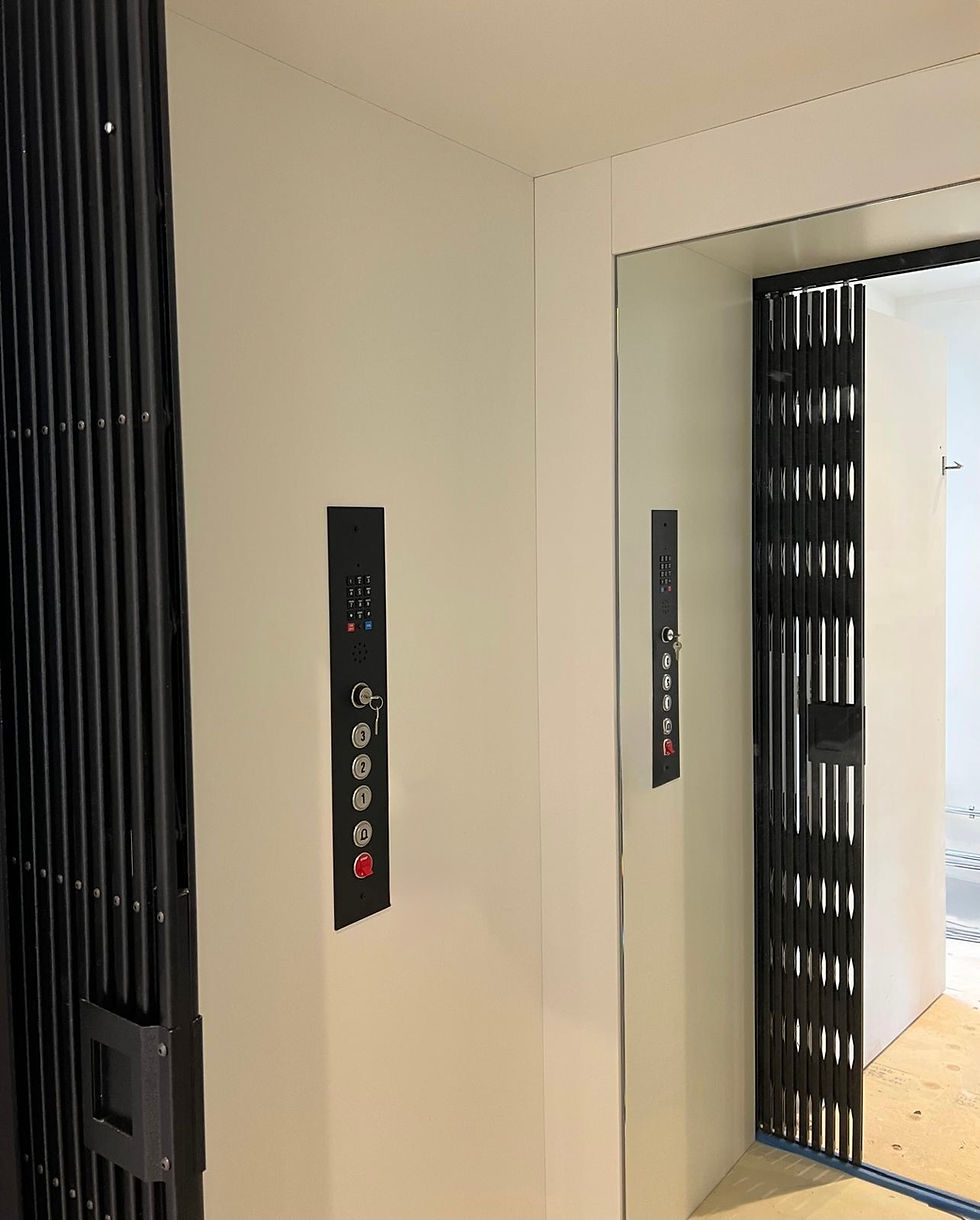
With our Aurora Hybrid Battery Drive, that is no longer an issue. The Aurora is a Machine-Room-Less (MRL) system. The highly compact mechanical drive fits neatly right inside the hoistway itself. It saves you an entire room's worth of space.
What You Need Above and Below
Space isn't just about width and depth; you also have to think about the top and bottom of the shaft.
The Pit: At the very bottom floor, we need a slight depression so the floor of the elevator cab sits perfectly flush with your house flooring when you roll or walk in. For our systems, you only need a standard 12-inch pit.
The Overhead: At the very top floor, you need enough ceiling height for the cab to safely reach the landing. A standard 8-foot or 9-foot ceiling is usually more than enough clearance.
A Quick Word on the Installation Process
Because our Aurora MRL system has such a compact mechanical design, we have the flexibility to go in at almost any time—even after the home is completely finished.
Our installation takes about 3 to 4 days. You’ll see some companies try to jam an installation into a single day just so they can race to send the next invoice. We do not operate like that. We prioritize absolute reliability and we do not rush. Taking 3 to 4 days ensures the guide rails are perfectly aligned and prevents annoying service callbacks.
Once the physical installation is done, our inspector performs a thorough review to ensure everything meets the current safety code. After they sign off, we hand you the keys, and your new elevator is ready to use.
Frequently Asked Questions
1. How much floor space does a home elevator take up? The most common hoistway size is 5'x5' (25 square feet) of clear interior space. You also need to account for the footprint of the 2x4 or 2x6 framing that makes up the walls of the shaft.
2. What if my builder already framed the shaft to a weird size? That isn't a problem for us. Because we provide custom sizes from our facility in Ayr, Ontario, we can accommodate almost any pre-sized or already built hoistway without forcing you to reframe the walls.
3. Do I need to build a separate machine room? No. If you choose our Aurora model, it is a Machine-Room-Less (MRL) system. All the compact mechanical components fit right inside the elevator shaft, saving you valuable square footage in your home.
4. Can an elevator fit into an older home's floor plan? Absolutely. Carving out a new shaft through existing floors usually takes a contractor 2 to 4 weeks before we arrive for our installation. Because we do custom sizing, it is much easier to fit into the existing framing of older floor plans.
5. How deep does the elevator pit need to be? Most of our residential elevators require a standard 12-inch pit at the lowest level. This ensures the elevator floor sits perfectly flush with your home's flooring.
6. How much overhead clearance do I need on the top floor? Standard residential ceiling heights of 8 or 9 feet are generally perfect. You do not need to build a massive commercial-style roof extension.
7. How long does it take you to install the elevator once the space is ready? Our installation takes about 3 to 4 days. We prioritize reliability over speed, ensuring the rails are perfectly aligned so you don't have to deal with service callbacks later. We can also install at almost any stage, even after the home is fully finished.
8. Do I need massive electrical upgrades for the elevator? No. The Aurora Hybrid Battery Drive plugs into a standard low-voltage setup, making the electrical requirements incredibly simple and space-efficient compared to commercial lifts.
9. Who inspects the elevator once it is installed? Safety is our top priority. Once the installation is complete, our inspector thoroughly tests the system to ensure it meets the current safety code before we hand you the keys.
10. Do you serve areas outside of Ayr? Yes. Our teams work 12 months a year across Southern Ontario, including Toronto, Oakville, London, Brantford, and Kitchener-Waterloo.


Comments