
Downsizing vs. Aging in Place: The Real Math of Adding an Elevator to Your Ontario Bungalow

Is it cheaper to downsize or install a residential elevator in an Ontario bungalow? Retrofitting a residential elevator into an existing bungalow is significantly more cost-effective than downsizing. Selling a detached home in Southern Ontario triggers roughly $75,000 to $110,000 in non-recoverable transaction fees (realtor commissions, provincial land transfer tax, legal costs, moving expenses), plus ongoing condo maintenance dues ($8,000–$14,000/year). Installing a Machine-Room-Less (MRL) elevator typically costs between $35,000 and $65,000, builds direct property equity, and qualifies for 2026 federal accessibility tax credits (HATC) and complete HST exemptions on primary residences.
The stairs are often the first sign that a well-loved home may no longer fit daily life. For many retirees in Ontario, especially those living in bungalows across Port Rowan, Port Stanley, Port Burwell, Norfolk County, Oxford Township, and London, the assumed next step is to sell the house and move into a single-level condominium.
That choice can make sense for some households. Yet selling is not a simple swap from one home to another. It is one of the most expensive financial events a Canadian homeowner can go through, and many of the costs produce no lasting value. Realtor commissions, HST, land transfer tax, legal fees, moving costs, staging, and new monthly condo fees can quickly cut into home equity built over decades.
That is why more retirees are looking at a different option: stay in the home they already own, make it easier to move between floors, and reclaim space that stairs have made harder to use.
Downsizing can cost more than expected
Selling a long-held home often feels like a practical way to simplify life. The lawn may feel too large. The basement may sit unused. The bedrooms may no longer be full. A single-level condo sounds easier.
The problem is that downsizing can come with a large upfront financial hit before any lifestyle benefits appear.
Take a family home valued at $1,000,000. If it sells through a standard 5% commission model, the commission alone is $50,000. With 13% HST added, that becomes $56,500. That money leaves the homeowner’s equity immediately.
If the replacement property is an $800,000 condominium in Ontario, the provincial land transfer tax is $12,475. Staging, legal fees, professional movers, cleaning, small repairs, storage, and utility changes can easily add another $8,000 to $12,000.
That means more than $75,000 can disappear within a short time, simply to complete the move.
Cost category | Example cost |
Realtor commission on a $1,000,000 sale | $50,000 |
HST on commission | $6,500 |
Ontario land transfer tax on an $800,000 purchase | $12,475 |
Moving, staging, legal, and related costs | $8,000 to $12,000 |
Estimated total transaction costs | Over $75,000 |
These are non-recoverable costs. They do not improve accessibility. They do not increase the value of the next home. They do not pay for more comfort, safety, or independence. They are the price of changing properties.
Then come the ongoing costs. Many Ontario condo owners pay monthly maintenance fees. In some markets, fees in the range of $700 to $1,200 per month are common, depending on the building, amenities, size, age, and reserve fund needs. That adds $8,400 to $14,400 per year in non-recoverable dues.
For a retiree living on pension income, investments, savings, or a fixed budget, that annual cost matters. It can reduce travel plans, family support, home care options, or simple day-to-day flexibility.
The real issue is often access, not the house itself
Many retirees do not actually want to leave their homes. They want to stop planning their day around stairs.
That is a different problem.
If the neighbourhood still feels right, the home is paid off or affordable, and the main floor works well, the issue may be vertical access. A finished basement, lower-level laundry room, guest suite, hobby area, rec room, storage space, or workshop becomes difficult to use only because stairs stand between one level and another.
This is especially true in Ontario bungalows. A bungalow may look like a single-level home from the street, but the lower level often matches the main floor in square footage. That basement may contain half the usable space in the house.
When stairs become tiring, painful, or risky, that space can slowly disappear from daily life.
A lower level that once hosted family gatherings may become seasonal storage. A sewing room, tool bench, or exercise area may sit untouched. Adult children and grandchildren may visit less comfortably if the guest room is downstairs. The homeowner still owns the space, heats it, insures it, and pays property tax on it, but cannot easily use it.
A home elevator changes that calculation. It can connect the main floor to the basement in a way that makes both levels feel available again.
A home elevator can protect equity and usable space
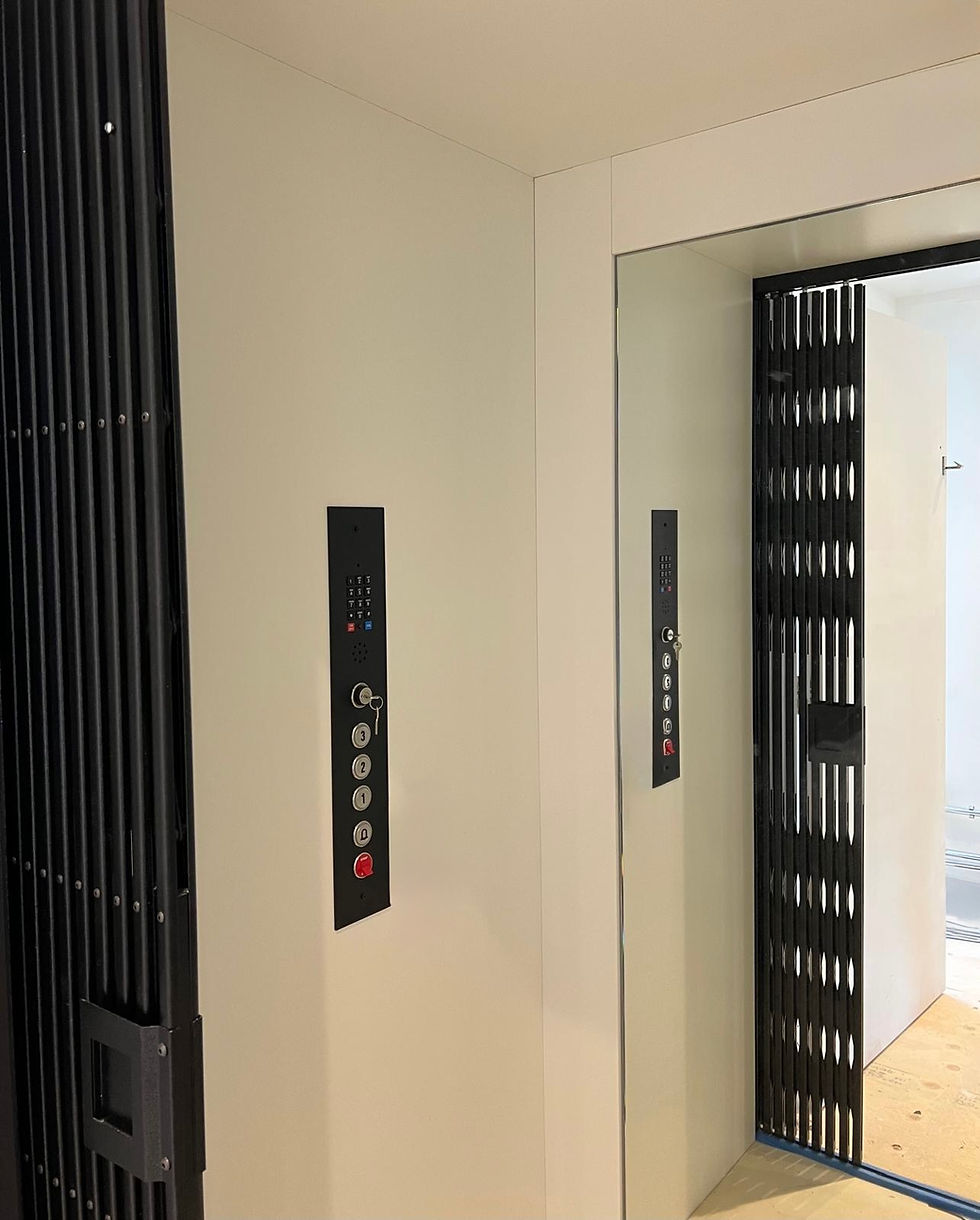
A shaftless home elevator is commonly used in residential settings because it does not require a separate machine room. Installed costs often fall between $50,000 and $95,000, depending on site conditions, travel distance, cab style, finishes, structural work, electrical requirements, and permit-related needs.
That is not a small expense. Yet it can compare favourably with the transaction costs of moving.
If selling and buying costs more than $75,000 before condo fees begin, a properly planned residential elevator may cost less than the financial friction of relocating. It also leaves the homeowner with an improved property rather than a receipt for closing costs.
The value is not only financial. A residential elevator can help with:
Daily movement
Moving between the main floor and basement without facing stairs several times a day.
Laundry and household tasks
Carrying baskets, bins, groceries, tools, or seasonal items between levels with less strain.
Guest access
Making lower-level guest suites or recreation rooms easier for family and visitors to use.
Future planning
Supporting aging in place before stairs become a crisis.
Home function
Restoring access to finished space that already belongs to the homeowner.
For a coastal bungalow in Oakville, Niagara, Turkey Point, Lakeshore, Port Rowan, Port Stanley, or Port Burwell, the lower level might be where the grandkids sleep after a beach day. In Norfolk County, Essex County or Oxford Township, it might be a workshop, hobby room, pantry, freezer area, or family room. In London, it might be a finished basement suite for visiting relatives.
The common thread is simple. The homeowner already paid for that space. Accessibility can help bring it back into daily use.

Many bungalows are well suited to elevator retrofits
One reason bungalow owners look seriously at home elevators is that the building layout can work in their favour.
A two-stop elevator only needs to connect the main floor and lower level. In some homes, the shaft can align with stacked spaces such as coat closets, pantries, storage rooms, or corners that already make sense in the floor plan. That can reduce disruption and preserve the rooms people use most.
Every home is different, and a site visit is needed to confirm what is possible. Still, common planning points include:
Shaft location
The best location is often where the elevator feels natural to use and causes the least disruption to bedrooms, kitchens, and main living areas.
Structural requirements
Floors need proper openings, support, and framing. A qualified installer or contractor will assess what changes are required.
Electrical needs
The system may require dedicated electrical work that meets code.
Permits and inspections
Residential elevator work must follow applicable Ontario requirements and local building expectations.
Cab size and doorway clearances
The cab should be practical for the way it will be used, including mobility aids if needed.
A good design does not feel like an afterthought. It should fit the home’s daily rhythm. The goal is not to turn a bungalow into a commercial building. The goal is to make movement between floors simple, safe, and dignified.
Tax relief can improve the numbers
Accessibility renovations can sometimes qualify for tax relief or rebates, which may reduce the net cost. The exact rules matter, so homeowners should confirm eligibility with a qualified tax professional, accountant, or program administrator before making decisions.
For eligible primary residence accessibility modifications, two programs are often discussed.
HST relief may reduce the project cost
Qualifying accessibility installations may be eligible for HST relief. Since HST in Ontario is 13%, this can make a meaningful difference on a large project.
For example, on a $50,000 qualifying installation, 13% HST would represent $6,500. If full relief applies, that amount can materially change the budget.
The key word is qualifying. Product type, purpose, documentation, installer details, and program rules can affect eligibility.
The Home Accessibility Tax Credit can help at tax time
The federal Home Accessibility Tax Credit, often called the HATC, allows eligible individuals to claim a 15% non-refundable tax credit on up to $20,000 of qualifying expenses. That can mean up to $3,000 back, depending on the taxpayer’s situation.
A non-refundable tax credit reduces tax payable. It does not create a refund beyond taxes owed. That distinction matters when estimating the actual benefit.
When these supports apply, they can make the net cost of a home elevator more attractive compared with selling, buying, and paying ongoing condo fees.
This article is for general information only and should not be treated as financial, tax, legal, or construction advice. A qualified professional can review the details of a specific home and household.
The lifestyle value is hard to measure, but easy to feel
Financial comparisons matter, but the decision is rarely only about money.
A move can be stressful. It means sorting decades of belongings, preparing a home for sale, timing a purchase, arranging movers, changing routines, learning a new building, and adjusting to condo rules. Some people welcome that change. Others find it draining.
Staying put can preserve the parts of life that already work:
The familiar route to the grocery store
Neighbours who check in after a storm
A garden planted over many years
Space for family holidays
A workshop, freezer, hobby room, or sewing area
A driveway, porch, yard, or lake-area lifestyle
Pets that are comfortable in the home
For retirees in communities such as Port Rowan, Port Stanley, Port Burwell, Norfolk County, Oxford Township, and London, location can carry deep value. A bungalow near family, water, trails, services, or long-time friends is not always easy to replace with a condo.
A home elevator will not solve every aging-in-place issue. Door widths, bathroom safety, flooring transitions, lighting, exterior steps, and emergency planning may also need attention. Yet vertical access is often the largest barrier in an otherwise workable home.
When an elevator makes more sense than moving
A home elevator is most worth considering when several of these points are true:
Staying home may make sense when | Moving may make sense when |
The home is in good condition | The home needs major repairs beyond accessibility |
The neighbourhood still fits daily life | The location no longer supports health, family, or services |
The main floor works well | The entire layout is difficult to adapt |
The basement has valuable finished space | The lower level is unfinished and not needed |
Transaction costs would be high | A simpler home is available at a clear net benefit |
Long-term condo fees are a concern | Condo living offers services the homeowner truly wants |
The best choice is the one that supports safety, finances, and quality of life. For some, that will be a condo. For many bungalow owners, the better question is whether a targeted accessibility upgrade can solve the real problem without giving up equity and space.

The better first step is a cost comparison
Before listing a home, it helps to compare both paths on paper.
One column should show the cost of selling and buying:
Realtor commission and HST
Land transfer tax
Legal fees
Staging and repairs
Moving and storage
New furniture or downsizing costs
Monthly condo fees
Parking, locker, or special assessment risk
The other column should show the cost of staying and adapting:
Elevator purchase and installation
Structural work
Electrical work
Permits and inspections
Any related accessibility upgrades
Possible HST relief
Possible Home Accessibility Tax Credit
Future maintenance
This exercise often changes the conversation. The question becomes less emotional and more practical.
If moving costs over $75,000 in near-term friction and adds ongoing condo fees, a $35,000 to $65,000 elevator installation may deserve serious attention. If the elevator also restores access to hundreds or even thousands of square feet of finished basement space, the value becomes clearer.
For many Ontario retirees, downsizing is not the only path to easier living. The right accessibility upgrade can protect home equity, preserve community ties, and make a familiar bungalow work for the next stage of life.
The most useful next step is simple: price the true cost of moving, then price the true cost of adapting. Once both numbers are side by side, the choice often looks very different.

Comments