
The Evolution of Vertical Living

The history of the home elevator is a fascinating journey from ancient royal novelties to essential architectural standards. The earliest vertical transport dates back to Archimedes' rope-pulley system in 236 BC, eventually evolving into the counterweighted "flying chairs" used by European royalty in the 1700s. The true revolution occurred in 1852 when Elisha Otis invented the mechanical safety catch, turning a dangerous industrial hoist into a safe passenger vehicle. While the 1920s introduced electric residential models to the mansions of the ultra-wealthy, the late 20th century created a dangerous "safety gap"—meaning most home elevators installed prior to the mid-2000s lack critical safety devices and can be hazardous to operate today. Modern residential elevators have moved past these unregulated eras and bulky hydraulic pumps, becoming seamless, space-saving architectural features driven by continuous battery power and strict, modernized safety codes.
For centuries, the idea of an automated lift inside a private residence was nothing more than an eccentric luxury reserved for kings and industrial magnates. Today, the technology has evolved from manual labour to sophisticated electrical engineering, making vertical mobility a standard, highly reliable feature in multi-story architecture.
Here is a detailed look at how the residential elevator evolved into the reliable technology we use today.
1. The Ancient Roots: Ropes, Pulleys, and "Flying Chairs"
The concept of vertical transport is ancient. The Roman architect Vitruvius documented that Archimedes built a rudimentary elevator around 236 BC. It was essentially an open cab supported by hemp ropes and operated by animal or human labour using winches. For thousands of years, these basic lifts were strictly for moving heavy construction materials, not people.
The first true "residential" lifts appeared in Europe. In 1670, Erhard Weigel, a professor of mathematics, built a "flying chair" in his private home in Jena, Germany, using a system of counterweights. This concept caught the attention of royalty, and in 1743, King Louis XV of France had a chaise volante (flying chair) installed at the Palace of Versailles so he could easily, and privately, access his apartments on the second floor.
2. The Industrial Revolution and The Safety Catch
For the first half of the 19th century, vertical transport was entirely industrial and largely terrifying. Early hoists were powered by steam engines and relied on thick hemp ropes to pull heavy freight up through textile mills and factories. However, these ropes frayed and snapped with alarming regularity. If the lifting cable failed, the cab plummeted to the bottom of the shaft, destroying the cargo and severely injuring anyone inside. Because of this fatal flaw, elevators were strictly barred from residential use.
That all changed in 1852 when Elisha Otis, an American industrialist working in a bedstead factory, invented the safety elevator. Otis didn't invent the elevator itself; he invented the failsafe. He designed a mechanical safety catch utilizing a wagon spring and a set of toothed guide rails. As long as the hoist rope was pulled tight, the spring remained flat and the cab moved freely. But the moment the rope snapped and lost tension, the spring instantly bowed outward, driving iron teeth into the wooden guide rails and locking the cab securely in place.
Otis famously demonstrated this at the 1854 New York Crystal Palace exhibition. Standing in an open elevator cab hoisted high above a gasping crowd, he ordered his assistant to cut the suspension rope with an axe. Instead of crashing to the floor, the cab barely dropped a few millimetres before locking firmly in place. "All safe, gentlemen," Otis announced. This single invention bridged the gap between dangerous freight hoists and safe passenger travel, opening the door for elevators to eventually enter the private home.

3. The Gilded Age: Elevators for the Elite
Even with the safety catch, late 19th-century elevators were powered by massive, loud steam engines or early hydraulic systems that required enormous water tanks in the basement. They were simply too large for a house. The real residential breakthrough required electricity.
In 1880, German inventor Werner von Siemens built the first successful electric elevator. As municipal electrical grids rapidly expanded in the early 20th century, the technology shrank in size, making it practical for the private mansions of the ultra-wealthy. Furthermore, the invention of the automated push-button control system meant homeowners no longer needed to hire a dedicated, full-time elevator operator to manage complex manual levers.
In the 1920s, C.C. Crispen, a Pennsylvania engineer, recognized the need to navigate the grand staircases of existing estates. He invented the first practical stairlift, followed quickly by the "Elevette"—one of the first dedicated residential elevators designed specifically to be retrofitted into the footprint of a home's existing stairwell.
Almost overnight, custom-built electric lifts became the ultimate status symbol of the Gilded Age and the Roaring Twenties. Industrialist Thomas Edison had one of the very first residential Otis elevators installed in his sprawling Glenmont estate in New Jersey. John Ringling, the wealthy circus magnate, installed a luxury lift in his Ca' d'Zan mansion in Florida. Ringling’s elevator was notable because it wasn't just a metal box; it featured ornate, custom-carved wood panelling that perfectly matched the mansion's opulent architecture. This marked the exact moment the residential elevator transitioned from a piece of mechanical utility into a bespoke architectural centrepiece.
4. The Late 20th Century: The Safety Gap
As the post-war housing boom continued through the 1980s and 1990s, home elevators became more affordable and started appearing in upper-middle-class homes rather than just the estates of billionaires. However, this era created a dangerous regulatory blind spot.
While commercial elevators were heavily regulated by strict safety codes, residential elevators were often treated as a "wild west" by manufacturers. It is a harsh reality of the industry that most home elevators installed prior to the mid-2000s lack many critical safety devices and can be dangerous to operate today. These older systems routinely utilized standard hollow-core interior doors that flexed under pressure, causing cheap locking hardware to fail. Even worse, many were installed without strictly enforcing the space between the landing door and the elevator cab door. If you purchase an older home today with an elevator installed before 2005, a comprehensive safety modernization is almost always required before it should be used.
5. The Modern Standard
Thankfully, the industry eventually caught up. The modern standard for residential vertical mobility has completely shifted, abandoning the dangerous loopholes and bulky hydraulic pumps of the past century.
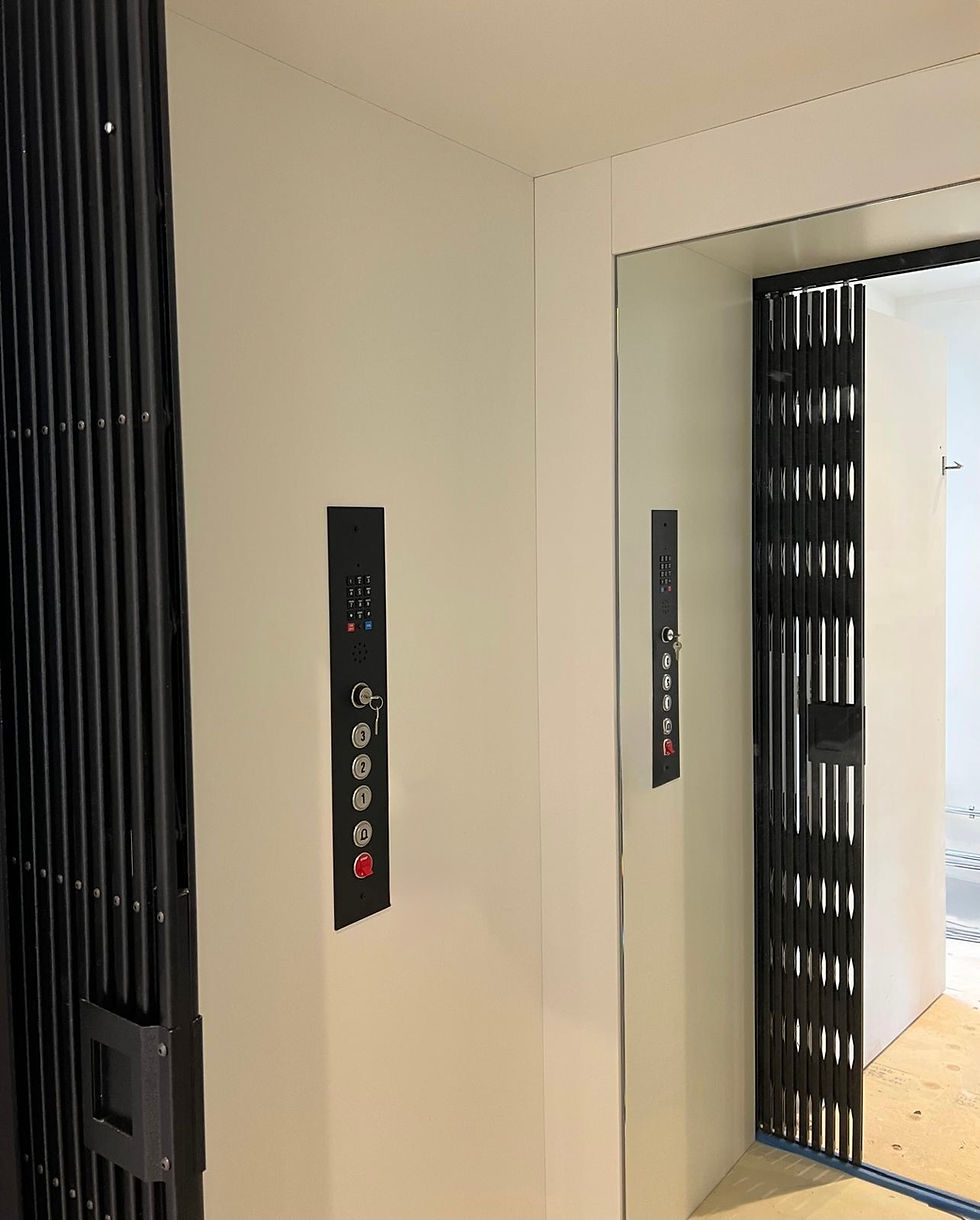
Today, space-saving Machine-Room-Less (MRL) technology fits entirely within the hoistway. Utilizing full-time 24V battery-operated drives charged continuously by standard household outlets, passengers are never stranded, even during a total power grid failure.
More importantly, the safety gap has been closed. Early open-cab designs and unregulated doors have been replaced by the strict ASME A17.1 / CSA B44 safety codes. By mandating heavy solid core landing doors to anchor certified electromechanical interlocks, and strictly enforcing the ¾" × 4" gap rule to prevent entrapment, modern residential elevators are definitively the safest method of navigating a multi-story home.
(For architects and homeowners building custom properties across the GTA, Oakville, King Township, and the Canadian Shield of Muskoka and Sudbury, Sabre Elevator provides in-house expertise to ensure your residential lift meets all codes while maximizing your valuable square footage.)


Comments